
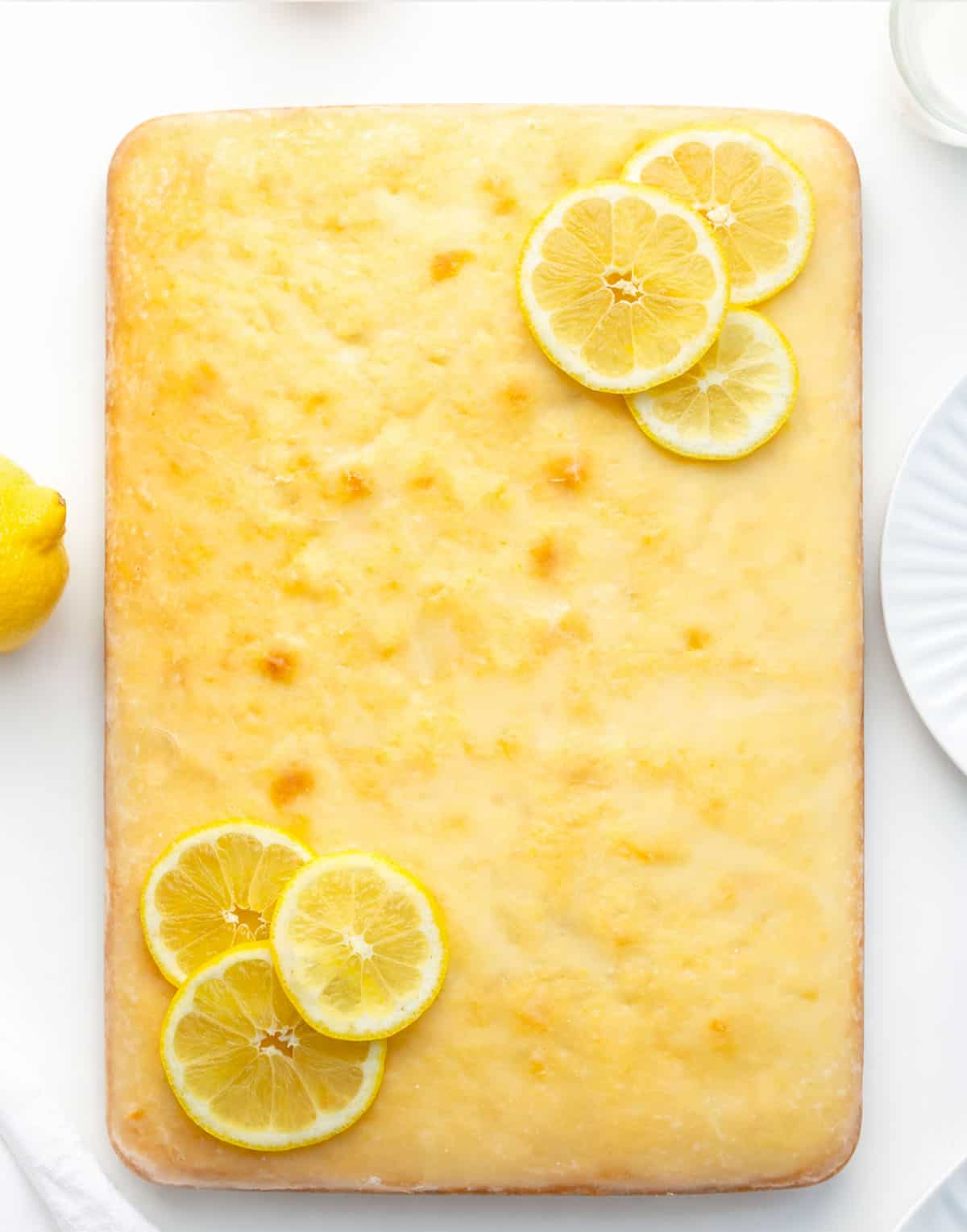
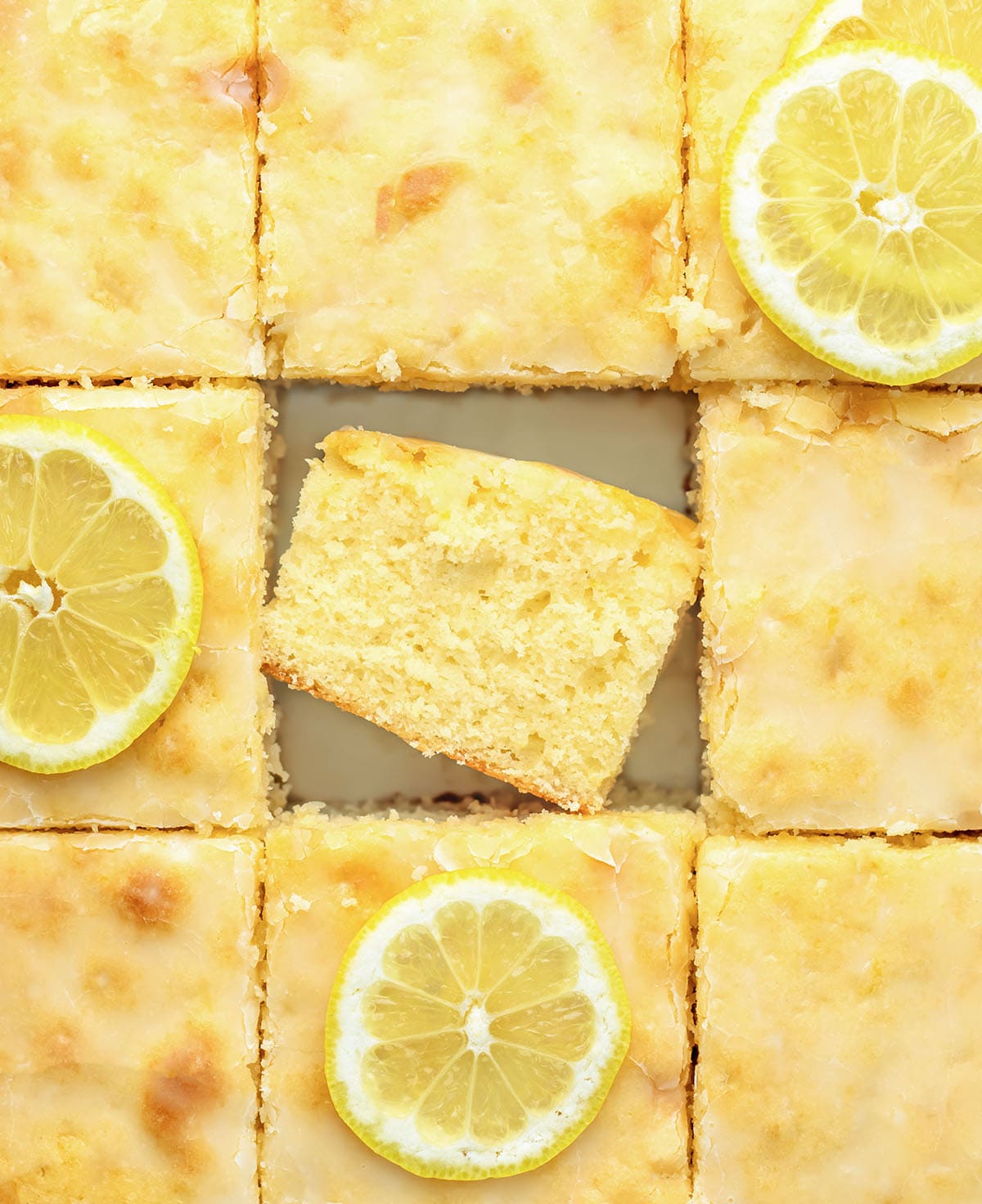
This Lemon Sheet Cake is soft, bright, and full of fresh lemon flavor in every bite. With a tender crumb, a light citrus tang, and a simple lemon glaze that soaks right into the top, this cake is perfect for spring gatherings, potlucks, or anytime you want something fresh and easy to slice and share. It bakes up in a 9×13 pan, making it simple to serve a crowd without any fuss! If you love easy sheet cakes, be sure to try my Chocolate Cake Recipe for a rich, classic option or this fun and nostalgic Ding Dong Sheet Cake.
Ingredients & Substitutions
- All-Purpose Flour: This gives the cake its structure. Make sure to measure it correctly so the cake stays soft and tender.
- Unsalted Butter: Butter adds rich flavor and keeps the cake moist. Let it soften, so it mixes smoothly. You can use salted butter if needed; just reduce the added kosher salt slightly.
- Granulated Sugar: Sugar sweetens the cake and helps create a soft crumb.
- Eggs: Eggs help hold everything together and add richness. Room temperature eggs mix in more easily. Out of eggs? Check out my egg substitutes to try.
- Vanilla Extract: Vanilla adds a warm flavor that pairs nicely with the lemon.
- Whole Milk: Milk keeps the cake soft and smooth. You can use 2% milk if needed. In a pinch, buttermilk can work for a slightly richer flavor.
- Lemon Zest: This adds bright, fresh lemon flavor. Try to use fresh lemons for the best taste.
- Fresh Lemon Juice: Fresh juice gives the cake its signature tangy flavor. Bottled juice can work, but fresh is best.
- Lemon Glaze: A simple mix of confectioners’ sugar, fresh lemon juice, and milk creates a smooth, tangy-sweet topping. You can use heavy cream instead of milk for a richer glaze, or skip the milk and use extra lemon juice for a stronger citrus flavor.
FAQs
Can I make lemon sheet cake ahead of time?
Yes! You can bake the cake a day in advance. Let it cool completely, then cover it tightly. Add the glaze the day you plan to serve for the freshest flavor.
Can I use bottled lemon juice instead of fresh?
You can, but fresh lemon juice gives the best flavor. It’s brighter and more natural. If you can, use fresh juice for both the cake and the glaze.
Why is my lemon cake dense?
This usually happens if the batter is overmixed or the flour is overmeasured. Mix just until combined, and spoon the flour into your measuring cup for the best results.
Can I make this cake more lemony?
Yes! You can add a little extra lemon zest to the batter or use more lemon juice in the glaze for a stronger citrus flavor.
Can I use a different pan for lemon sheet cake?
Yes, but the baking time will change. You can use two 8-inch round pans for a layer cake or a 9×9-inch pan for a thicker cake. Start checking for doneness a few minutes early and watch for a toothpick to come out clean.
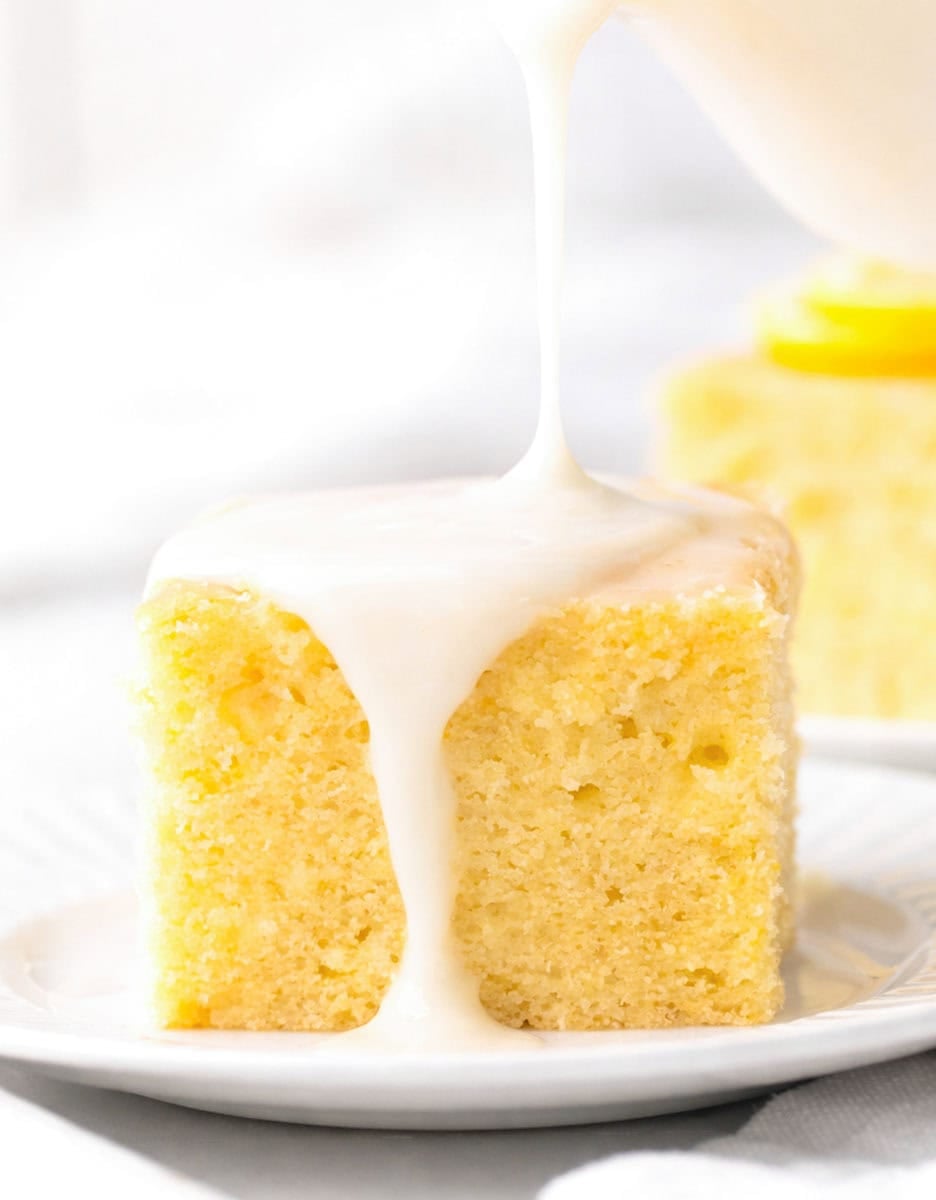
Serving Ideas
- Serve this lemon sheet cake as a simple dessert with a hot cup of coffee or tea. The bright lemon flavor pairs perfectly with a warm drink.
- Add fresh berries like strawberries or blueberries on the side for a fresh, colorful touch. They complement the citrus flavor beautifully.
- For a slightly richer dessert, serve each slice with a dollop of whipped cream or a scoop of vanilla ice cream. Or, try a piece with your favorite no-churn ice cream recipe!
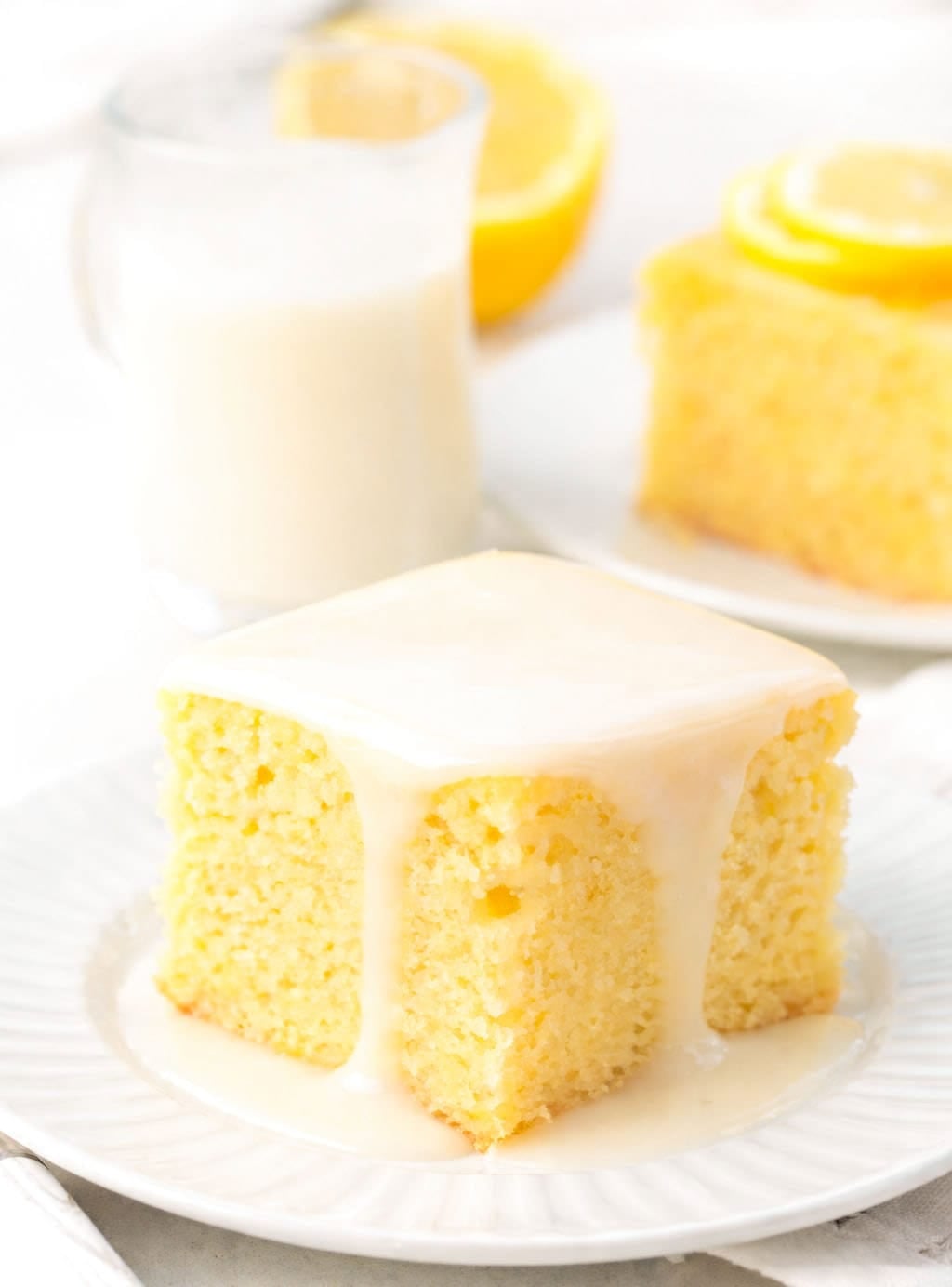
How to Store Lemon Sheet Cake
Room Temperature: Store the cake covered at room temperature for up to 2 days. Keep it in an airtight container or tightly wrapped to help it stay soft.
Refrigerator: For longer storage, keep the cake in the refrigerator for up to 5 days. Let it come to room temperature before serving for the best texture.
Freezer: You can freeze the cake for up to 2 months. Wrap the unfrosted or glazed cake tightly in plastic wrap, then place it in a freezer-safe container. Thaw in the refrigerator overnight or at room temperature before serving.
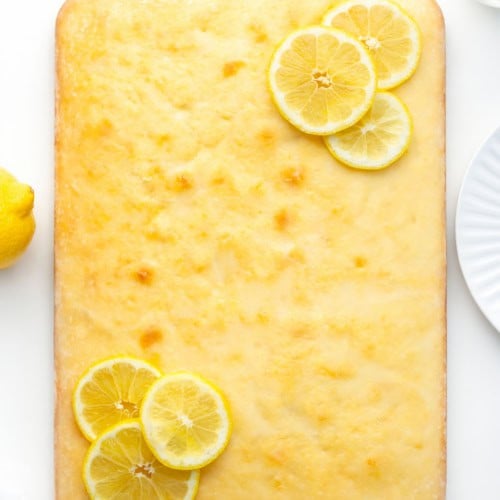
Lemon Sheet Cake
Ingredients
Lemon Cake
- 3 cups (354 g) all-purpose flour
- 2 ½ teaspoons baking powder
- ½ teaspoon baking soda
- ½ teaspoon kosher salt
- 1 cup (2 sticks / 227 g) unsalted butter, softened
- 1 ¾ cups (350 g) granulated sugar
- 3 large eggs, room temperature
- 1 teaspoon vanilla extract
- 1 cup (244 g) whole milk, room temperature
- 1 tablespoon lemon zest, about 2 lemons
- ⅓ cup freshly squeezed lemon juice, about 2 lemons
Lemon Glaze
- 1 cup (125 g) confectioners' sugar
- 1 tablespoon fresh lemon juice
- 1 tablespoon whole milk
Instructions
- Preheat oven to 350°F. Line a 9×13-inch baking dish with parchment paper, leaving some overhang for easy removal.
- In a medium bowl, whisk together the flour, baking powder, baking soda, and salt. Set aside.
- In a large bowl using a handheld mixer or stand mixer fitted with the paddle attachment, beat the butter and granulated sugar on high speed until smooth and creamy, about 3 minutes. Scrape down the sides and bottom of the bowl as needed.
- Add the eggs and vanilla extract; beat on high speed until fully combined, about 2 minutes. Scrape down the bowl again.
- With the mixer on low speed, add the dry ingredients in three additions, mixing just until combined after each. Do not overmix.
- Slowly pour in the milk, then add the lemon zest and lemon juice. Mix just until everything is incorporated and no large lumps remain. The batter will be slightly thick.
- Pour the batter into the prepared baking dish and spread it into an even layer.
- Bake for 28 to 35 minutes, or until a toothpick inserted in the center comes out with a few moist crumbs, but no wet batter. (Start checking at 28 minutes; if the edges brown too quickly, loosely tent with foil.)
- Remove from the oven and place the pan on a wire rack. Let the cake cool completely in the pan before glazing.
Lemon Glaze
- In a medium bowl, whisk together the confectioners' sugar, lemon juice, and milk until smooth and glossy. Add more lemon juice, a teaspoon at a time, for a thinner glaze, or more confectioners' sugar for a thicker glaze.
- Pour the glaze over the top and gently spread it to the edges of the cake.
- Allow the glaze to set at room temperature for 20 to 30 minutes before cutting and serving.
Did you make this recipe?
Thank you for making my recipe! You took pictures, right? Well go ahead and post them on Instagram! Be sure to mention me @iambaker and use the hashtag #YouAreBaker.